Bulk Fuel Supplier FAQs: Your Questions, Answered
Answering some of the most common questions we get regarding fuel options, scheduling, pricing, service options, payment terms, and more.
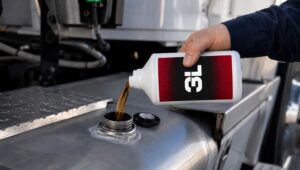
If you are new to owning a diesel vehicle or heavy equipment, there is an integral additive that you need to know about – Diesel Exhaust Fluid. DEF is a non-toxic, colorless, odorless, and non-flammable mixture of deionized water and urea that is injected into the exhaust system of diesel vehicles.
DEF is made from 32.5% urea and 67.5% de-ionized water. Urea is a non-toxic, organic pH-neutral substance that binds nitrogen. De-ionized water is water that has been treated through processes such as reverse osmosis and ultra-filtration, making it contamination free. When introduced into the exhaust stream, the urea component undergoes a chemical reaction, breaking down nitrogen oxides into harmless nitrogen and water vapor.
DEF is used by vehicles with the Selective Catalytic Reduction (SCR) system, therefore not all diesel engines require it. Older diesel engines might not have SCR systems, so they do not require it.
The SCR system has been around for decades, but in 2010 it became a requirement for all new diesel models. This technology works to reduce the nitrogen oxide (NOx) emissions – a harmful emission from diesel engines – and turn them into nitrogen and water vapor, which is significantly less harmful to the environment.
Running out of DEF won’t damage the engine, but for most systems, you will not be able to start your vehicle or you will have a significant reduction in performance. Fortunately most newer vehicles have a DEF gauge that will send an alert or warning light when your DEF levels get low.
The frequency of filling up your DEF (Diesel Exhaust Fluid) tank depends on your vehicle and driving habits. Most diesel vehicles use about 2-3% of DEF compared to diesel fuel. Refer to your vehicle’s DEF gauge regularly and refill as needed to avoid any system malfunctions or reduced performance.
DEF has a shelf life of about 1 year when stored properly. You can extend its life to 2 years if it is stored at 75°F. Additionally, DEF is naturally clear/colorless. So if you notice discoloration, it’s likely contaminated or old.
Yes, DEF will freeze at 12°F, but freezing does not harm the quality of it. It does expand when it freezes though, which can damage any tank it is in. So if you’re driving in very low temperatures it is advised not to fill the tank up to capacity.
No, you cannot use water as a substitute for DEF. Most systems will identify that it is not DEF and your engine will not start. Tap water contains minerals and ions that can harm the SCR system and using it completely negates the purpose of using DEF, which is to reduce harmful emissions.
Doing this can significantly damage your vehicle. If this happens, do not turn your car on and have it towed to a dealership or mechanic shop to have the entire system flushed.
Yes, DEF can positively impact fuel efficiency because by reducing the NOx emissions, your engine burns fuel more effectively, resulting in better fuel economy.
DEF is an important part of making sure that vehicles are abiding by the stringent federal emissions standards and using it reduces emissions by up to 90%.
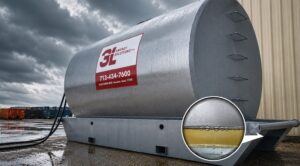
DEF is a necessity for diesel engines. If you are a business in need of a fuel, lubricants, DEF, a fuel tank, or just wanting a little more information about it, get in contact with us! One of our industry experts will help guide you through all of our product and service offerings.

Answering some of the most common questions we get regarding fuel options, scheduling, pricing, service options, payment terms, and more.

In today’s fast-paced world, the need for efficient and reliable fuel delivery services has never been more critical. Whether you’re running a large fleet of vehicles, managing a construction site, or operating a farm, having access to a consistent fuel supply is essential. Bulk fuel delivery services provide a convenient solution for businesses that require large quantities of fuel. In this article, we’ll explore how bulk fuel delivery works, its benefits, and what to look for when choosing a service provider.

In today’s fast-paced world, businesses cannot afford unexpected disruptions. One of the most critical challenges faced by many industries is the sudden need for fuel during a crisis. Whether it’s a natural disaster, a power outage, or supply chain interruptions, having a reliable fuel supplier can make all the difference.

While it may seem like a waste product, used oil offers numerous advantages, and repurposing it not only protects the environment but also delivers other significant benefits, which we will discuss in this article.

Fuel is the lifeblood of construction and mining operations. Heavy-duty machinery, generators, and transport vehicles need consistent, reliable fuel supplies to keep the operation running smoothly and prevent costly downtimes. In this article, we’ll explore the critical role that job site fuel delivery plays in the construction and mining sectors and how it contributes to operational success.